
Engaging the Process
Gaining a competitive Edge
Businesses that build and maintain a coherent Opportunity Architecture perform measurably better than businesses that don't.
Opportunity Architecture defines the operational structure of a commercial opportunity from which an effective strategy emerges.
Considering OA?
Step 1: challenge our research
Assess a previous initiative
Run a previous initiative - one in which you participated - through the Business Initiative Survey to see whether your experience supports or contradicts the theory that Opportunity Architecture is correlated with outcome.
10 minutes

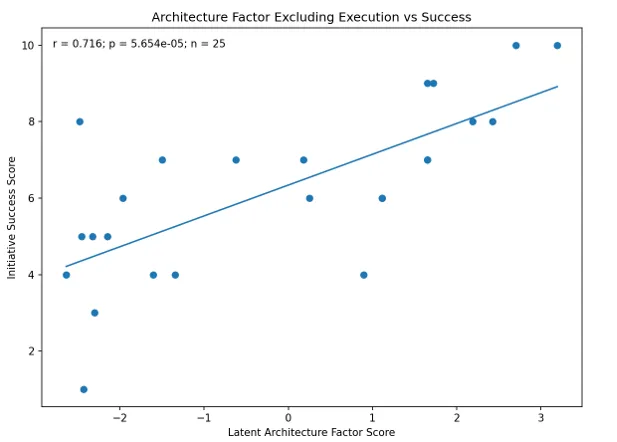
Does your outcome correlate with your Opportunty Architecture score?
If so, go on to step 2.
(If not, we'd love to understand why!)
Step 2: Attend an introductory meeting
Learn about Opportunity Architecture, how it can help you develop a more effective strategy and identify hidden risks, and where it might apply in your organization.
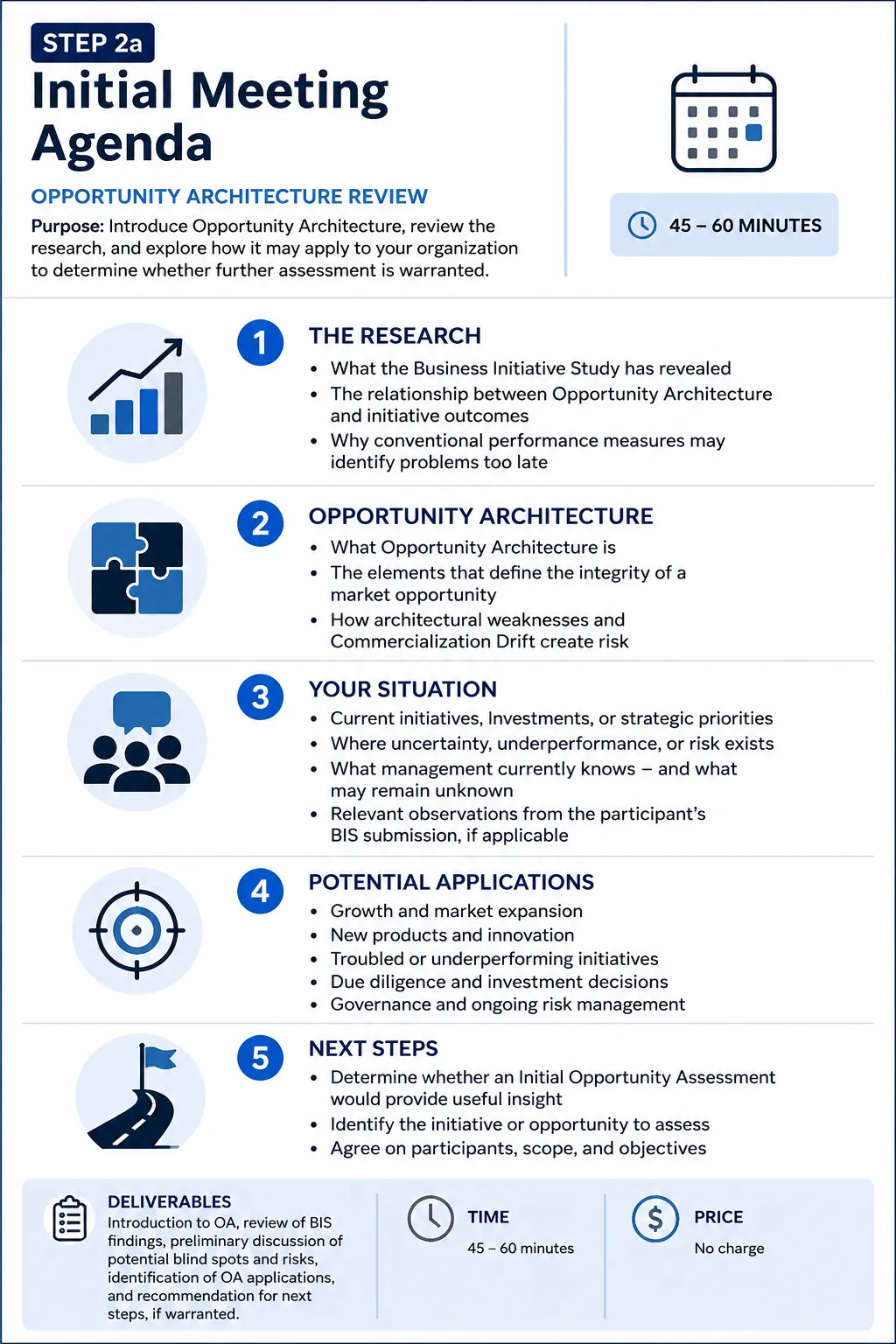
Step 2A: Executive overview
Purpose
Learn about Opportunity Architecture, review what the research has revealed about business initiative performance, and explore how architectural weaknesses and blind spots can impact your organization's initiatives, investments, and growth objectives.
This introduction is also designed to determine if and where Opportunity Architecture may be useful to your organization, and whether further assessment is warranted.
Step 2B: Conduct an initial (pilot) assessment
Purpose
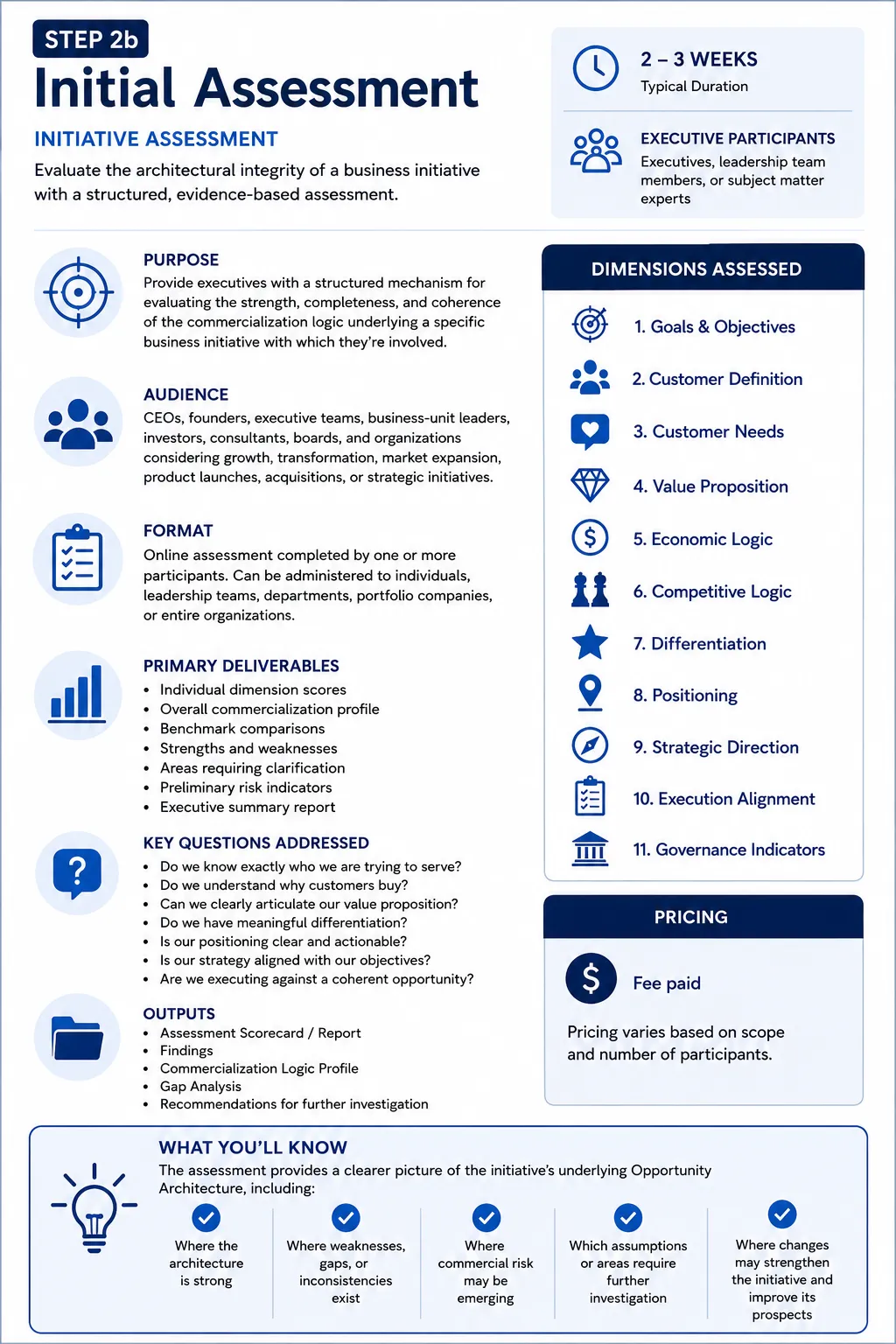
Assess the architectural integrity of a current business initiative to uncover weaknesses, blind spots, and emerging risks before they impair performance.
The guided step is designed to determine where Opportunity Architecture may be useful to your organization, and whether further assessment is warranted.
Step 3: Institutionalize Opportunity Architecture
Incorporate Opportunity Architecture into your planning, execution and governance processes to minimize risk and maximize performance.
3A: Training overview
The chart below shows the skills to you need to acquire, and their depth, depending on your role.
...by Role
The skills you should acquire in order to leverage OA depend on your role in the management process.
...core curriculum
The curriculum is organized around the competencies required to understand, assess, build, apply, and govern Opportunity Architecture.
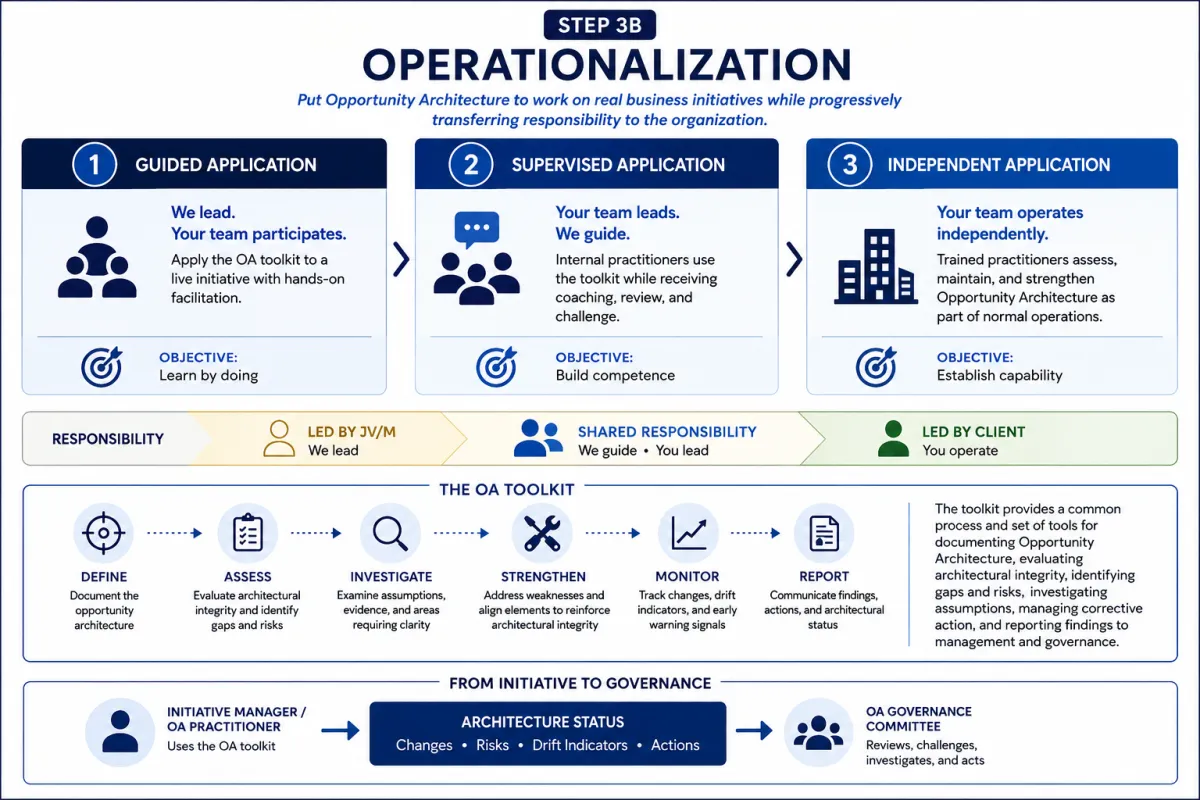
3B: Put Opportunity Architecture into practice
Opportunity Architecture enables and enforces a discipline that can set new initiatives on the road to success, and put drifting initiatives back on the road to success.
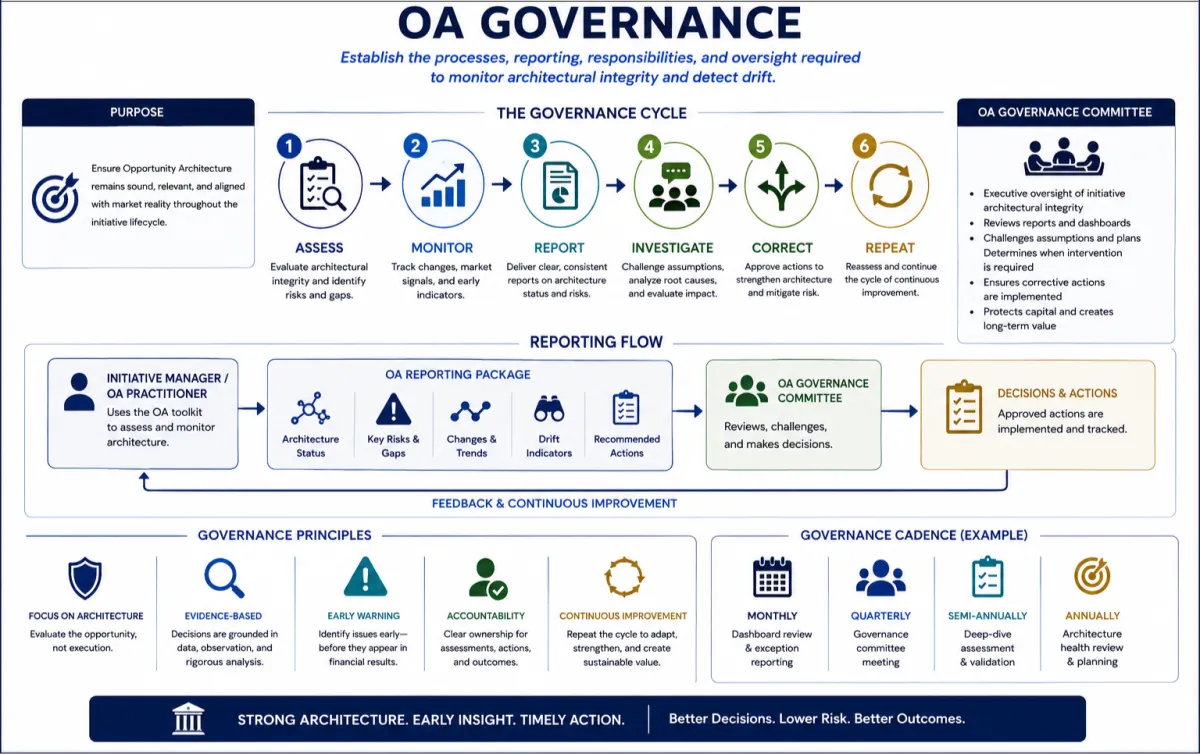
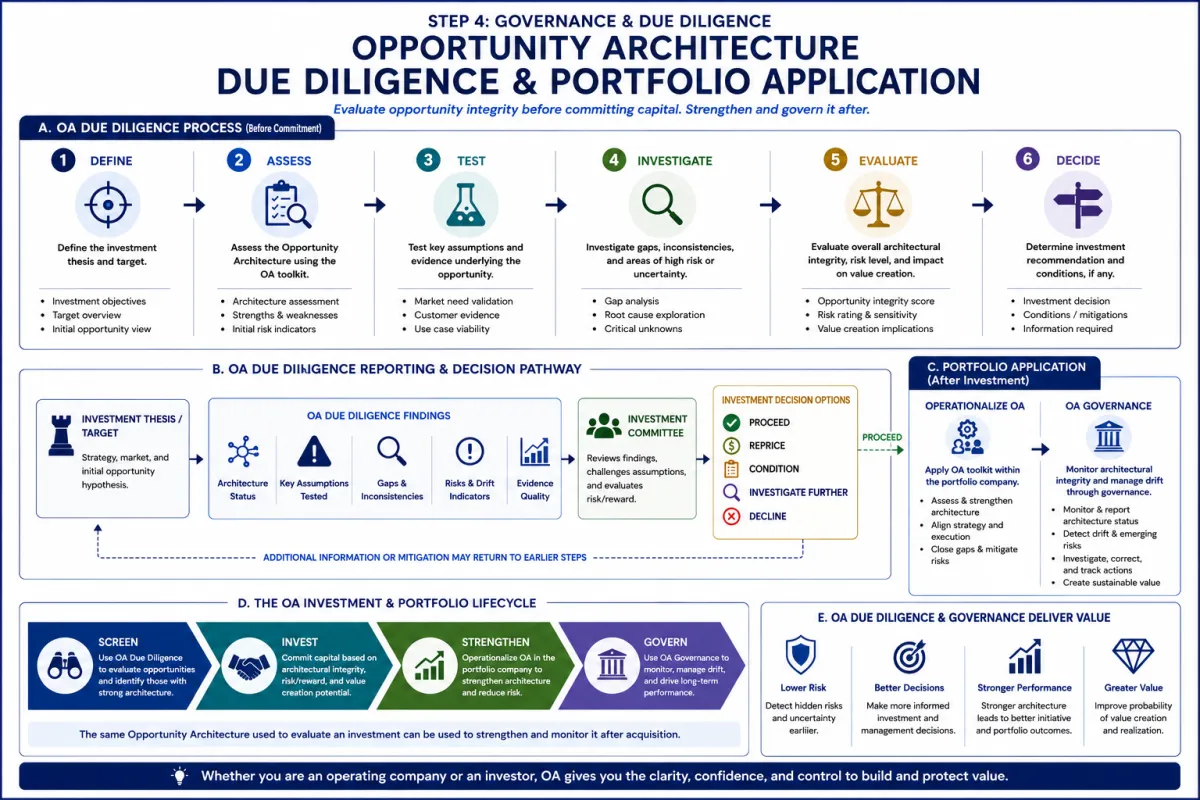
step 4: Governance & Due Diligence
Once you understand the foundations of Opportunity Architecture, and how a coherent architecture can increase the probablility of success, you can use it to manage initiatives, or to evaluate them as investments.
opportunity architecture
Every initiative has one - but it can be good or bad
It can be assessed, strengthened and managed
It reveals risks that conventional metrics miss
OA coherence is strongly associated with outcome


Our team is here to answer your questions and help you get started on turning your vision into reality.
30+ years • 400+ Business Initiatives • Startups to F100
Research, Strategy, Execution
Links
Terms of Use
Privacy Policy
Cookie Policy
© 2026 . All rights reserved.